Shopping note: retailer links in this guide are ordinary direct links. If a link becomes an affiliate link, it will be identified and we may earn a commission. Read our disclosure.
A dinner table feels welcoming when people have enough room to eat, reach the food and talk without looking around an arrangement of objects. Beautiful plates and linens can help, but the most useful starting point is the meal and the number of people expected.
Begin with what is already in the cupboard. A mixed collection can look thoughtful when the spacing, color and serving plan are coherent. Buy selectively after you have laid out a complete place setting and identified a real gap, rather than starting with a list of everything a formal table might contain.
Plan the meal’s footprint
Set out the dishes you intend to serve from, even if they are empty for now. A generous bowl of pasta takes a different amount of space from plated portions. Decide which items will stay on the table and which can remain on a nearby surface. This prevents a centerpiece from occupying the only sensible position for the food.
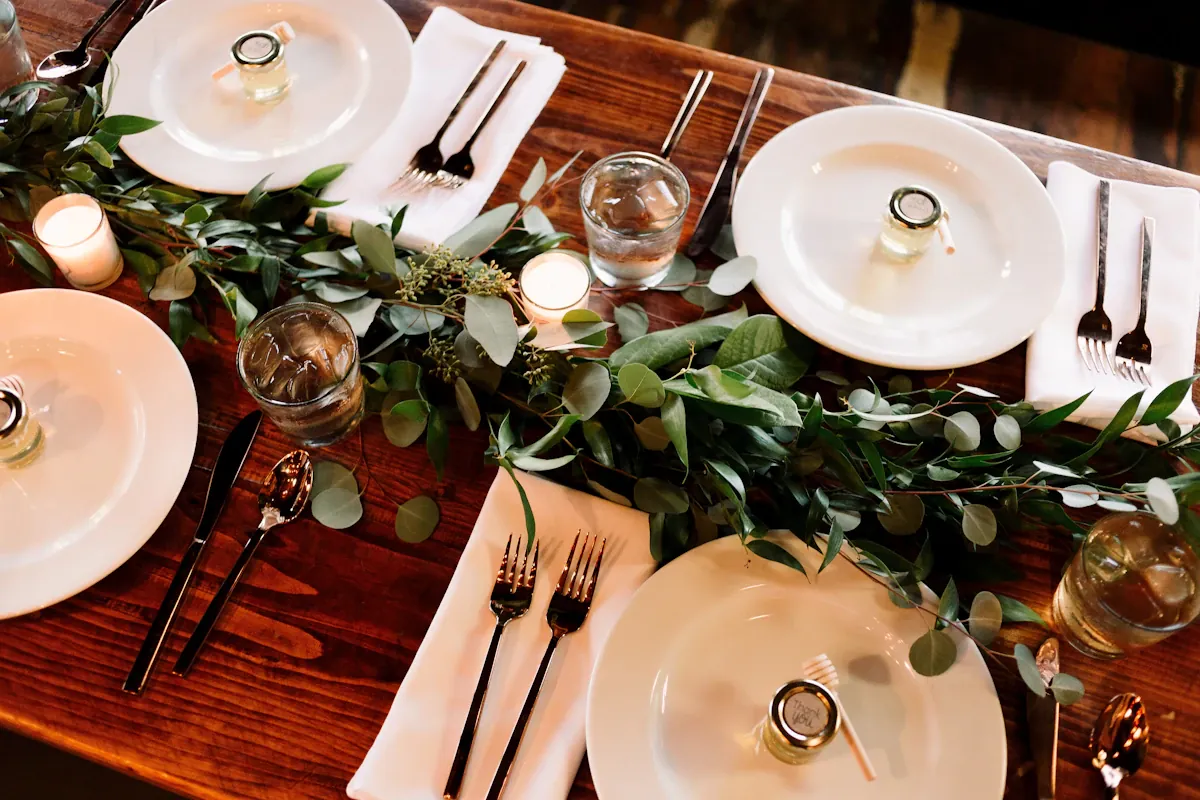
Lay one complete setting with a plate, glass, utensils and napkin. Add the chair and sit down to check reach and elbow room. If the table is compact, use fewer objects at each place and refill water from a nearby jug. Skip an additional decorative layer when it makes the setting crowded or forces diners to balance essentials on the edge.
Make a mixed collection feel intentional
Bring mismatched crockery together through one repeated feature, such as an uncomplicated shape or a shared pale color. Variation can feel relaxed when every place has an equally useful setup. Avoid giving one guest a much smaller plate simply because it matches a color theme. The functional differences matter more during the meal than the styling differences.
Before buying more plates, measure the cupboard and check the items you use for ordinary meals. Look at care instructions and whether the pieces suit the way you wash and store them. A beautiful oversized dinner plate may not fit your existing shelf or dishwasher arrangement. Buy the piece you will use between gatherings, rather than a complete service reserved for an imagined occasion.
Choose linens you will wash willingly
Napkins add softness and a consistent note of color without requiring a tablecloth. Choose a size that feels useful in the hand, and read the washing instructions. Some wrinkles may fit the relaxed look you want; others will create work you do not enjoy. Consider how the fabric looks after ordinary care rather than only when carefully styled.
A runner can define the center of the table while leaving the edges exposed. A full cloth changes the feel more dramatically but needs the correct dimensions and an appropriate drop for the seating. Measure the table and account for any extension you use. Skip a pale, delicate cloth if it will make you anxious throughout a casual meal; an easy-care option or bare table may suit the evening better.
Keep the center low and easy to move
Use a small vase or a simple arrangement that leaves the sightline open between people. Make sure it can be moved quickly if another serving dish arrives. A collection of smaller objects offers flexibility, but too many can create the same crowding as one oversized centerpiece. Leave clear space around anything fragile.
If candles are part of the plan, follow the candle and holder safety instructions and keep them appropriately away from other objects. Consider whether fragrance would compete with the meal. A decorative object does not have to remain on the table just because it looked good before guests arrived. The table should adapt to eating, not require everyone to work around the styling.
Finish with the serving routine
Put serving utensils with the relevant dishes and decide where used plates will go. Set aside a practical surface for spare glasses or water if there is room. These small decisions make hosting calmer than a last-minute purchase of matching accessories. Check that a heavy jug is comfortable to lift when filled, especially if guests will pass it around.
Buy the missing item that you notice repeatedly: perhaps enough ordinary glasses, a useful serving spoon or napkins you are happy to wash. Skip specialist pieces when an existing bowl or tray does the job. After the meal, note what was used and what stayed untouched. The next gathering can be easier and more personal without the table becoming more elaborate.
BROWSE WITH A PLAN
Where to begin your search
Use the checks above when comparing current assortments at Nordstrom, IKEA, MUJI. These links go to retailer websites; they are starting points for your own comparison, rather than endorsements of every item.
Before ordering, confirm the current composition, measurements, care instructions, delivery cost and return conditions for the exact item. Availability and terms can change.
Your questions, considered
How do I make everyday plates feel special?
Give each place enough space, repeat one detail such as a napkin color and keep the serving arrangement deliberate. Good proportions and a comfortable table can do more than adding decorative pieces.
Do I need separate glasses for every drink?
Use glassware appropriate to what you are serving and what you own. For a relaxed meal, a small, workable selection is often easier to manage than multiple glasses crowding every setting.
Our approach: practical editorial guidance, without claims of hands-on product testing. How we make recommendations.